Researcher at Level 2, Jamiʿat al-Zahra; Holder of a Specialized Doctorate (Ph.D.) in Architecture from Shahid Beheshti University
Abstract
This study seeks a more precise understanding of the concepts related to the architecture mentioned in verse 87 of Sūrat Yūnus, particularly the meaning of qiblah in the expression wa-jʿalū buyūtakum qiblatan (“and make your houses a qiblah”). The verse speaks of the Israelites’ sojourn in Egypt, the establishment of a group of dwellings, and their being made a qiblah for them. Employing a comparative method, this foundational, text-centered research analyzes lexicographical data and various translations and interpretations of the verse. It seeks to answer the question: How have Persian translations and exegetical narrations understood the word qiblah in verse 87 of Sūrat Yūnus, and which meaning is most compatible with the context of the verse? An examination of the sources indicates that the principal disagreement among translators and exegetes of the Quran concerning this verse likewise pertains to the meaning of the word qiblah and to making the houses a qiblah. To resolve this divergence, the present article carefully examines forty old and modern Persian translations as well as the exegetical narrations related to the verse. The opinions of scholars are classified and analyzed one by one with regard to their impacts and consequences for architecture. The findings of the research consist of: the divine command to construct a residential quarter for the believers; the concentration of the dwelling place of this religious minority within the city; the emergence of a new concept in the form of the house-mosque (bayt-masjid); the centrality of the house-mosque of Prophet Moses (peace be upon him); the orientation of the houses toward the qiblah; and the local arrangement of the houses facing one another, which results in a linear order of the quarter.
گنابادی، حاج سلطان حسین، (۱۳۷۲). بیان السعاده فی مقامات العباده، مترجمان: رضا خانی و حشمتالله ریاضی، بیچا، تهران، مرکز چاپ و انتشارات دانشگاه پیام نور.
مدنی شیرازی، سیدعلیخانبن احمد، (۱۳۸۴). الطراز الاول و اکناز لما علیه من لغه العرب المعول، چ۱، مشهد، مؤسسه آلالبیت لإحیاء التراث.
مصطفوی، حسن، (۱۳۸۰). تفسیر روشن، چ۱، تهران، مرکز نشر کتاب.
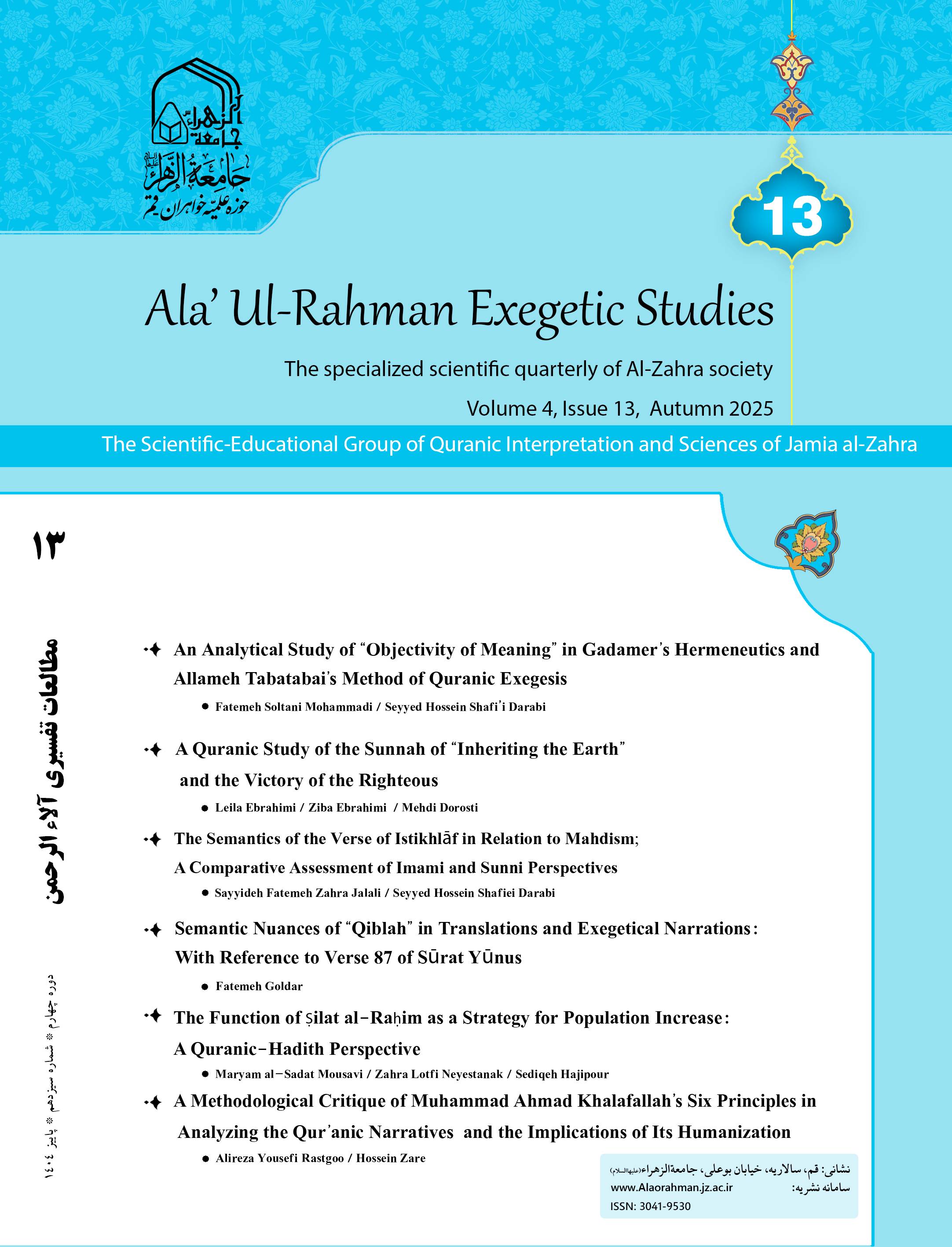
Goldar, F. (2025). Semantic Nuances of “Qiblah” in Translations and Exegetical Narrations: With Reference to Verse 87 of Sūrat Yūnus. Ala’ Al-Rahman Exegetic Studies, 4(13), 73-102.
MLA
Goldar, F. "Semantic Nuances of “Qiblah” in Translations and Exegetical Narrations: With Reference to Verse 87 of Sūrat Yūnus", Ala’ Al-Rahman Exegetic Studies, 4, 13, 2025, 73-102.
HARVARD
Goldar F. (2025). 'Semantic Nuances of “Qiblah” in Translations and Exegetical Narrations: With Reference to Verse 87 of Sūrat Yūnus', Ala’ Al-Rahman Exegetic Studies, 4(13), pp. 73-102.
CHICAGO
F. Goldar, "Semantic Nuances of “Qiblah” in Translations and Exegetical Narrations: With Reference to Verse 87 of Sūrat Yūnus," Ala’ Al-Rahman Exegetic Studies, 4 13 (2025): 73-102,
VANCOUVER
Goldar F. Semantic Nuances of “Qiblah” in Translations and Exegetical Narrations: With Reference to Verse 87 of Sūrat Yūnus. Ala’ Al-Rahman Exegetic Studies. 2025;4(13):73-102 (In Persian).