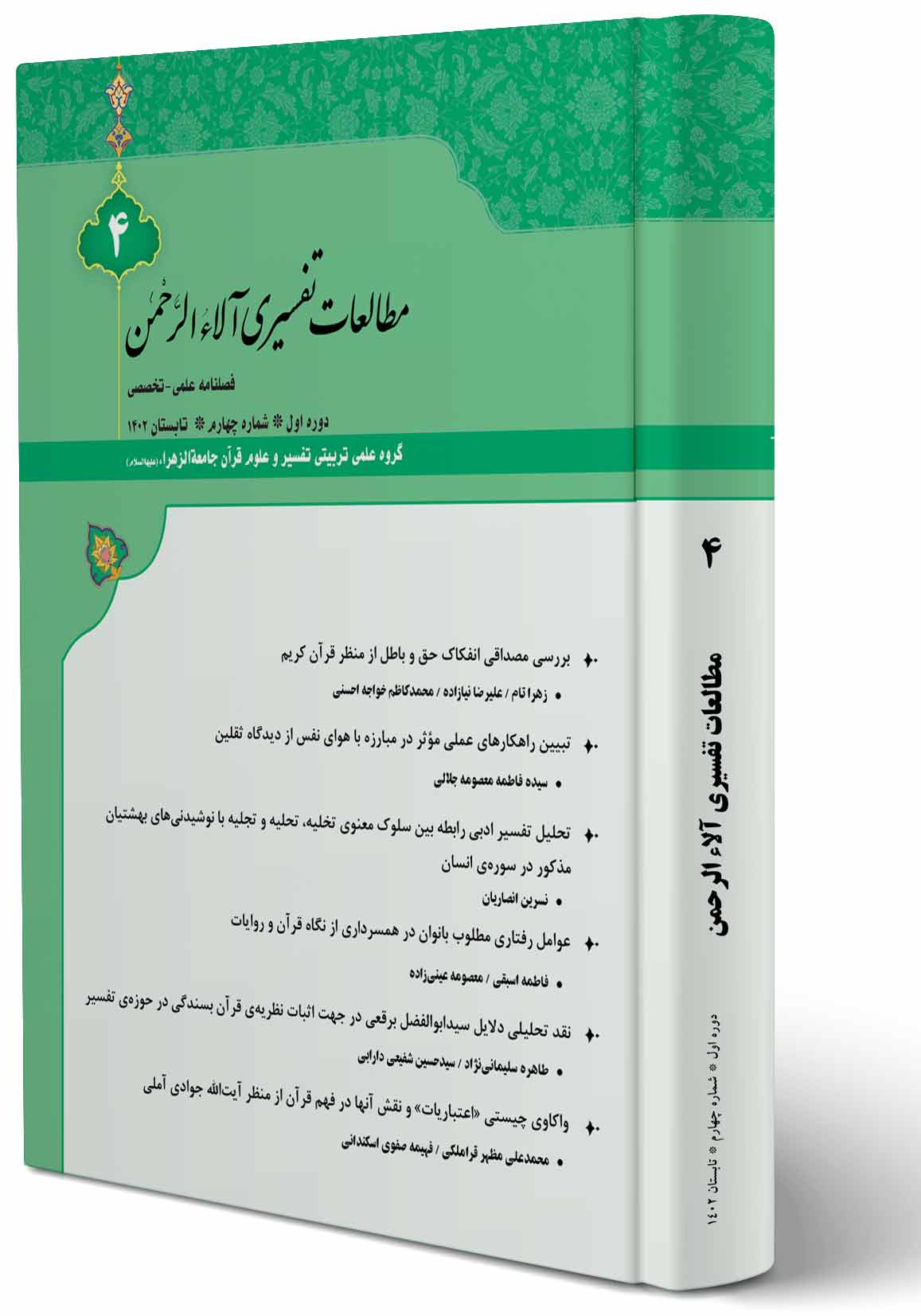
نوع مقاله : مقاله تخصصی
عنوان مقاله English
نویسنده English
The Holy Qur’an presents numerous divine glad tidings (bashā’ir) for believers, the attainment of which depends on specific conditions and qualifications. Despite the significance of this subject, the factors enabling believers to benefit from these divine glad tidings, as well as their comparative reflection in Meccan and Medinan verses, have received limited systematic investigation. Therefore, this study aims to identify, classify, and comparatively analyze the factors underlying believers’ attainment of divine glad tidings in the Meccan and Medinan revelations. The main research question examines which factors the Qur’an introduces as prerequisites for receiving divine glad tidings and how these factors differ or coincide in emphasis and function across the two periods of revelation. Employing a descriptive–analytical method based on library research, the study demonstrates that these factors can be classified into three major categories: doctrinal and cognitive, devotional and self-disciplinary, and social and community-building. Among the most significant are faith and righteous deeds, belief in the Prophet Muhammad (PBUH), trust in God (tawakkul), prayer, piety, repentance, financial altruism, migration, striving in the path of God, enjoining good and forbidding evil, and other social responsibilities. The comparative analysis indicates that the distinction between Meccan and Medinan verses lies not in the essence of these factors but in their emphasis: Meccan verses primarily focus on strengthening faith and individual spiritual formation, whereas Medinan verses, while preserving these foundations, emphasize the social manifestation of faith and believers’ communal responsibilities.
کلیدواژهها English