1
aduate of Level 4 in Comparative Exegesis; Member of the Exegesis Scientific Group, Jamiʿat al-Zahra
2
M.A. in Islamic Jurisprudence and Law; Level 3 Researcher in Exegesis and Quranic Sciences, Jamiʿat al-Zahra
3
M.A. in Women and Family Studies, University of Religions and Denominations; Level 2 Researcher, Jamiʿat al-Zahra
Abstract
Today, the crisis of declining birth rates has generated extensive structural challenges in the social and economic spheres. This study is organized with the aim of elucidating the strategic role of ṣilat al-raḥim (maintaining kinship ties) as a cultural driver in population policy-making, and of analyzing the mutual linkage between this Quranic doctrine and the multiplication of progeny. The central question is: How can ṣilat al-raḥim, as an emotional and supportive foundation, remove the mental and objective obstacles to childbearing, and what consequences does its severance entail for the faithful way of life? Employing a descriptive-analytical method and drawing upon Quranic verses and narrations (riwāyāt), the research first analyzes the concept of ṣilat al-raḥim in consolidating social capital, and then examines its functions in facilitating marriage and establishing psychological security for parents. Subsequently, the reciprocal effect of population decline on the physical contraction of the circle of relatives and the erosion of its existential (takwīnī) benefits is explored. The findings demonstrate that ṣilat al-raḥim, by establishing a “kinship support network,” distributes the spiritual and material costs of child-rearing and provides an atmosphere brimming with vitality - itself an educational necessity. Accordingly, having only one child not only contracts the circle of relatives but also confronts society with the status-based (waḍʿī) consequences of qaṭʿ al-raḥim (severing kinship ties), such as social isolation, poverty, and the diminution of the blessing of one’s lifespan. Ultimately, a return to the extended-family model is a prerequisite for the realization of the new Islamic civilization and the safeguarding of society’s value system.
حرعاملی، محمدحسن، (۱۱۹۱). وسائلالشیعه، بیچا، تهران، دار احیاء التراث العربی.
خدابخشی کولایی، آناهیتا؛ آقاخانی کوشکی، محبوبه؛ کلهر، ندا، (۱۳۹۸ش). واکاوی تجارب مادران در مراقبت از فرزند معلول، نشریه «پرستاری کودکان و نوزادان»، دوره ۶، ش۲.
دهخدا، علیاکبر، (۱۳۷۷). لغتنامه دهخدا، بیچا، تهران، دانشگاه تهران.
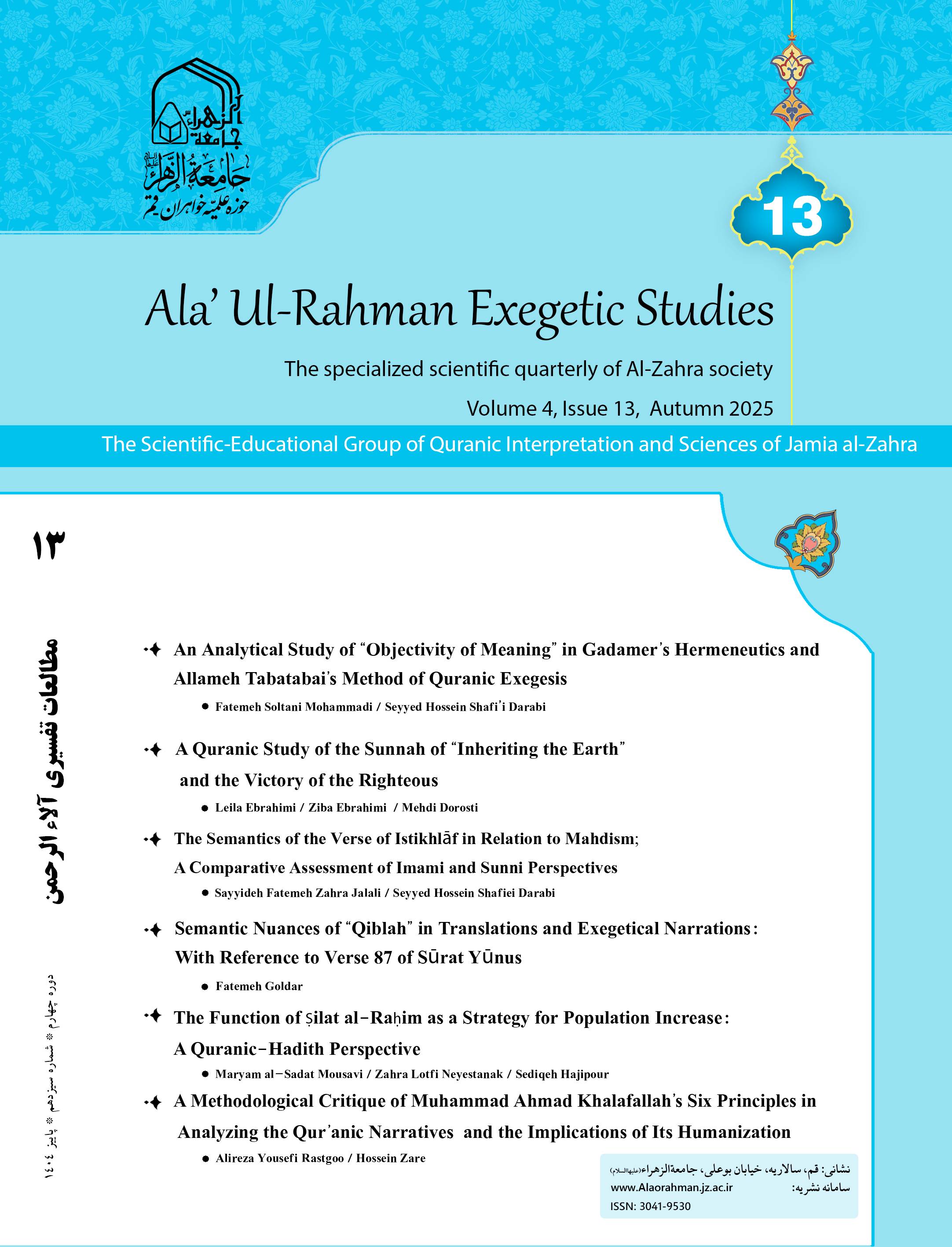
mousavi, M., Lotfi Neyestanak, Z., & Hajipour, S. (2025). The Function of Ṣilat al-Raḥim as a Strategy for Population Increase: A Quranic-Hadith Perspective. Ala’ Al-Rahman Exegetic Studies, 4(13), 103-126.
MLA
mousavi, M., Lotfi Neyestanak, Z., & Hajipour, S. "The Function of Ṣilat al-Raḥim as a Strategy for Population Increase: A Quranic-Hadith Perspective", Ala’ Al-Rahman Exegetic Studies, 4, 13, 2025, 103-126.
HARVARD
mousavi M., Lotfi Neyestanak Z., Hajipour S. (2025). 'The Function of Ṣilat al-Raḥim as a Strategy for Population Increase: A Quranic-Hadith Perspective', Ala’ Al-Rahman Exegetic Studies, 4(13), pp. 103-126.
CHICAGO
M. mousavi, Z. Lotfi Neyestanak & S. Hajipour, "The Function of Ṣilat al-Raḥim as a Strategy for Population Increase: A Quranic-Hadith Perspective," Ala’ Al-Rahman Exegetic Studies, 4 13 (2025): 103-126,
VANCOUVER
mousavi M., Lotfi Neyestanak Z., Hajipour S. The Function of Ṣilat al-Raḥim as a Strategy for Population Increase: A Quranic-Hadith Perspective. Ala’ Al-Rahman Exegetic Studies. 2025;4(13):103-126 (In Persian).